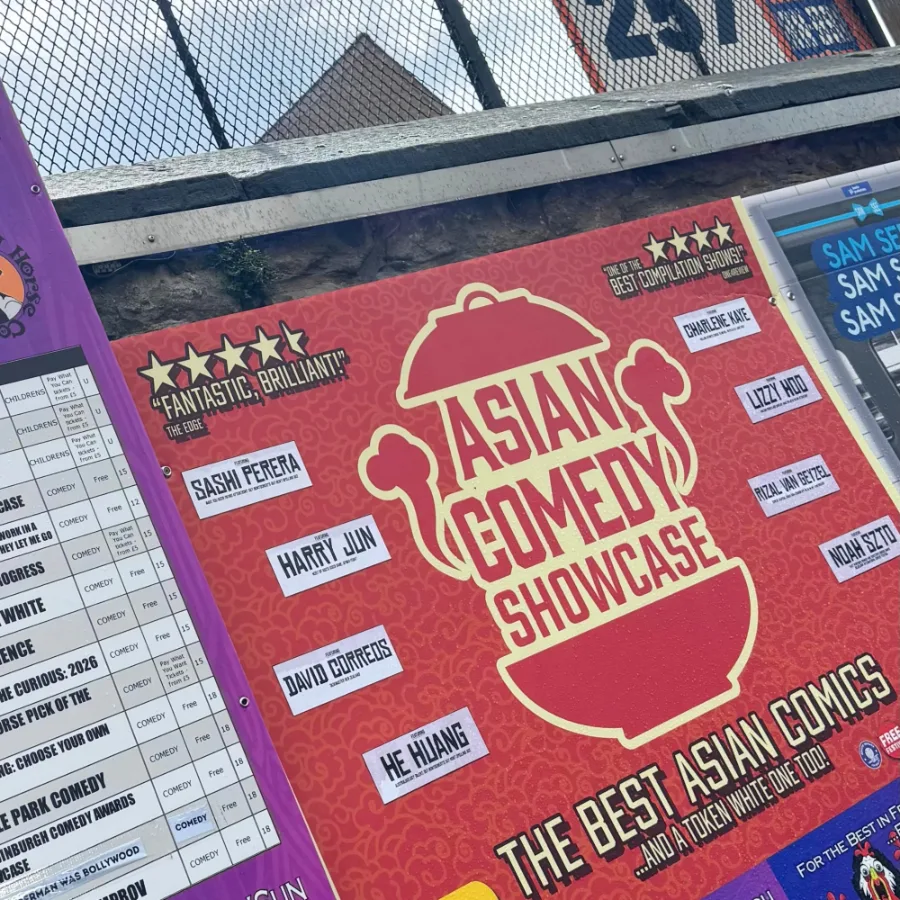
The Asian Comedy Showcase
Sam See makes a lovely MC, and the show gathers a real variety of comedians into a clear, well-built structure. The line-up changes daily, so no two visits are quite the same.
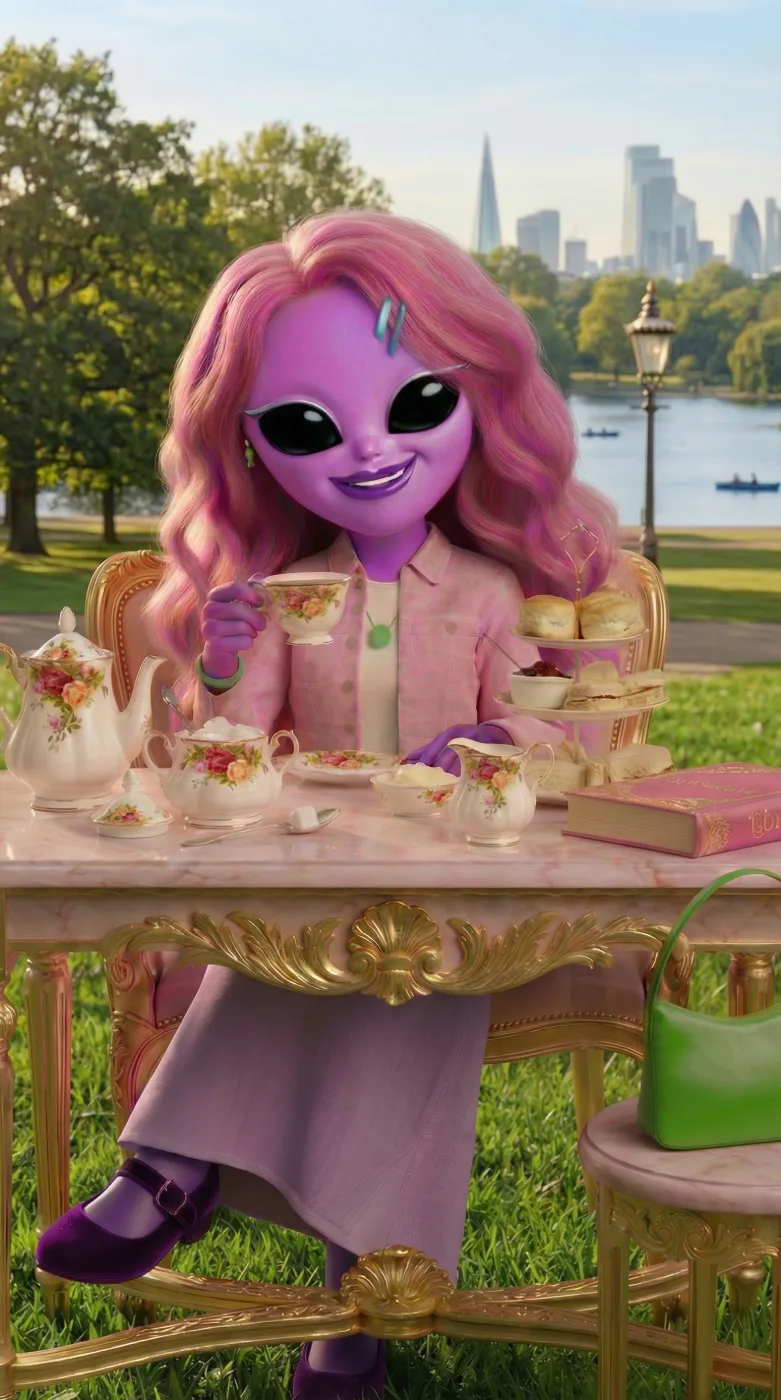
~ The Alien's Guide to British Comedy ~
One wrong turn at the Crab Nebula, one map with a cross over King's Cross, obviously a landing zone, and here I am. Spaceship impounded. Officer very polite about it. The Treaty Between the Stars lets me stay while the paperwork untangles itself, which on this planet may outlive the Sun. Why not take the learning opportunity? I am decoding the most mysterious human wisdom on this planet: British comedy. My fellows demand a full report. You, dear Earthling, are reading it.
★ STAR CHART ★ THE SPACE GUIDE AT A GLANCE ★
Mission HQ
What the grandmaship is launching next
Upcoming book:
Pinkoma's report on how Earthlings make each other laugh. Working title: The Alien's Guide to British Comedy. (Created by Bilee J)
🚀 available for purchase autumn 2026 ✨Space Reports
Dispatches from the researcher herself
Where the researcher actually went, written up by hand on whatever paper the café provides. Open the latest report to read the whole thing.
Edinburgh
September 2026
Edinburgh Fringe 2026: selected stand-up shows!

MEMO ★ PLEASE READ FIRST
Not sponsored, and featuring an act implies no affiliation. Photos were taken with permission or in public places. Appear in a photo and want it removed? Email hello@maqutt.studio.
Diary of Pinkoma ✿ · post edfringe26! edition
10 SEPTEMBER 2026 ★ BACK FROM THE FRINGE, STILL HUMMING ★ EDITOR'S PICKS: STAND-UP
MEMO ★ PLEASE READ FIRST
This page is not sponsored, and featuring an act does not imply any affiliation between the aliens and the artists. Photos were taken with permission or in public places. If you appear here and would like a photo taken down, just email hello@maqutt.studio and it will be removed. Everyone's choice will be respected.
The aliens had the loveliest time at the Edinburgh Festival Fringe. This year it brought 4,232 shows to the city between 7 and 31 August, and comedy was once again its biggest section. Here are a few highlights from the stand-up rooms, picked by yours truly.
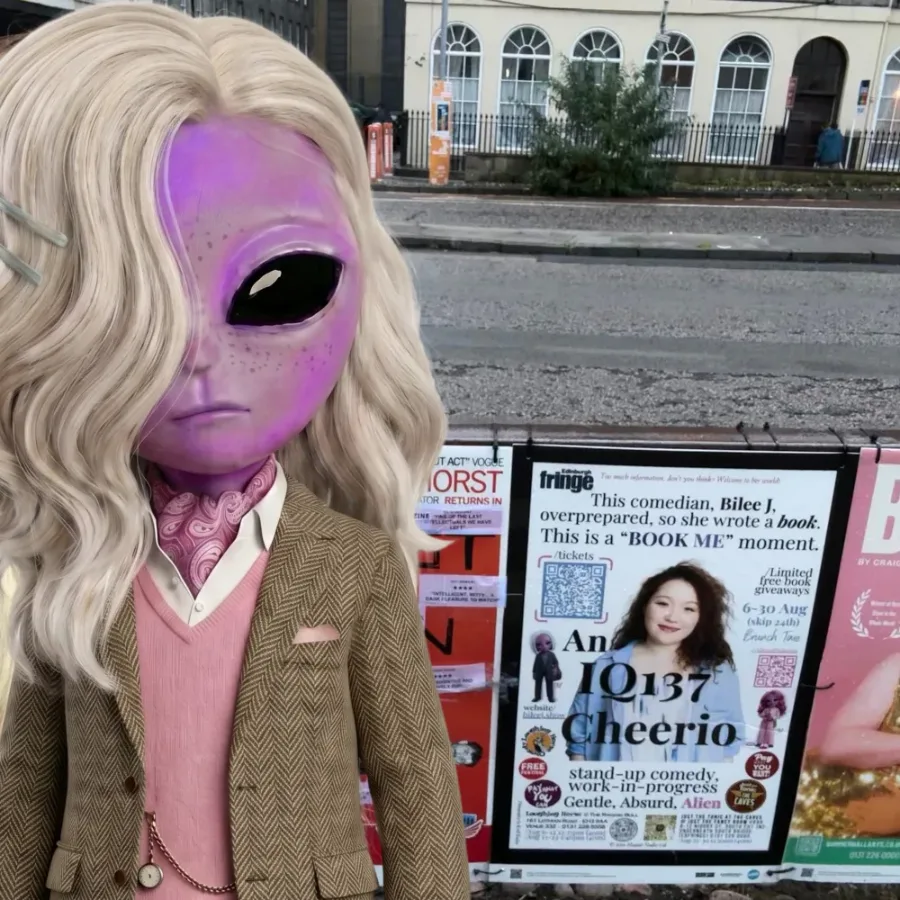
First, a wave to our human buddy Bilee J. She brought her work-in-progress stand-up show, An IQ137 Cheerio, to the Fringe, and with it the first working edition of the Pinkoma report (yes, the book!) for her audiences. After a 24-day run it took her days to recharge, which any alien with flat batteries will tell you is entirely fair.
Her daily Fringe diary lives on her website, bileej.show, and City Academy kindly wrote about where her journey began, and about our book.
STAND-UP ★ IN ALPHABETICAL ORDER
Sam See makes a lovely MC, and the show gathers a real variety of comedians into a clear, well-built structure. The line-up changes daily, so no two visits are quite the same.
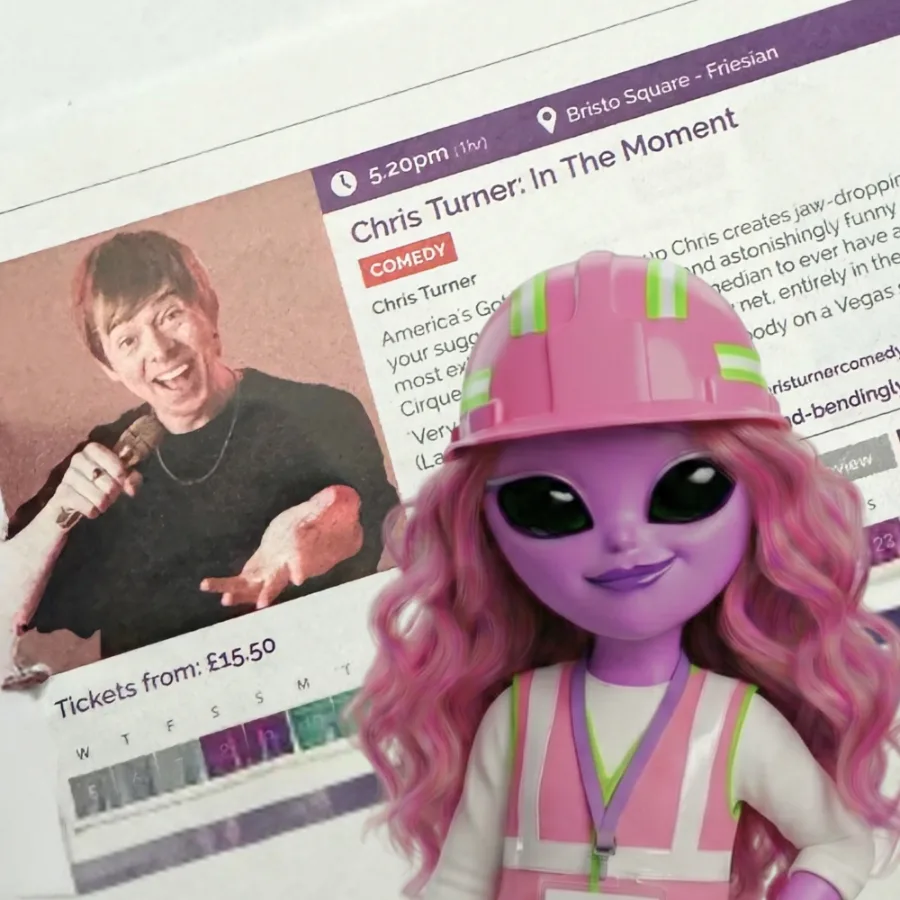
A seriously talented rapper-comedian who spins freestyle verses out of the audience's suggestions, right there on the spot. Quick-witted, skilful and great fun: a real joy to watch.

Yaaaas, queen! Hugely talented, with a commanding stage presence and beautifully crafted material, every piece presented in the best possible way. Powerful.

Not stand-up in the strict sense, but far too much fun to leave out: Queen Mary Mac, with proud Scottish roots, a glorious voice and a treasure chest of funny stories from cruise ships and beyond. Comedy from the first note to the last.
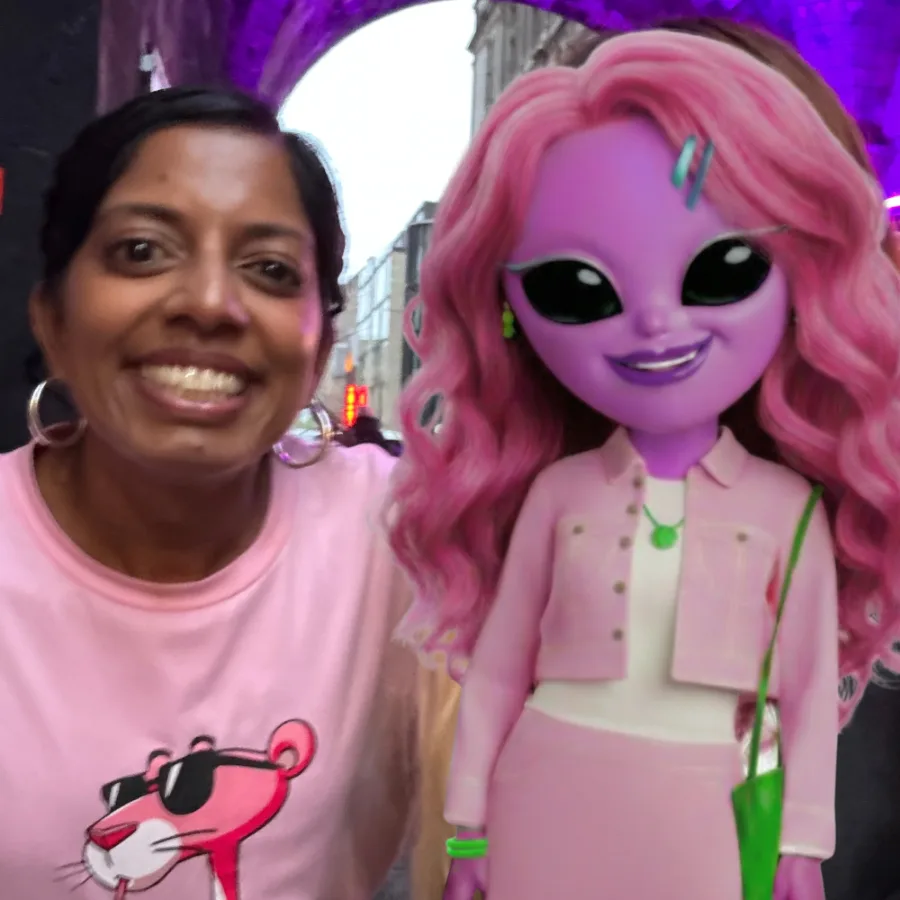
Before the Fringe, the algorithm served up a few of her funny bits, and what a find they were. Articulate, bubbly and bright, Sashi turns life's personal struggles into comedy gold.
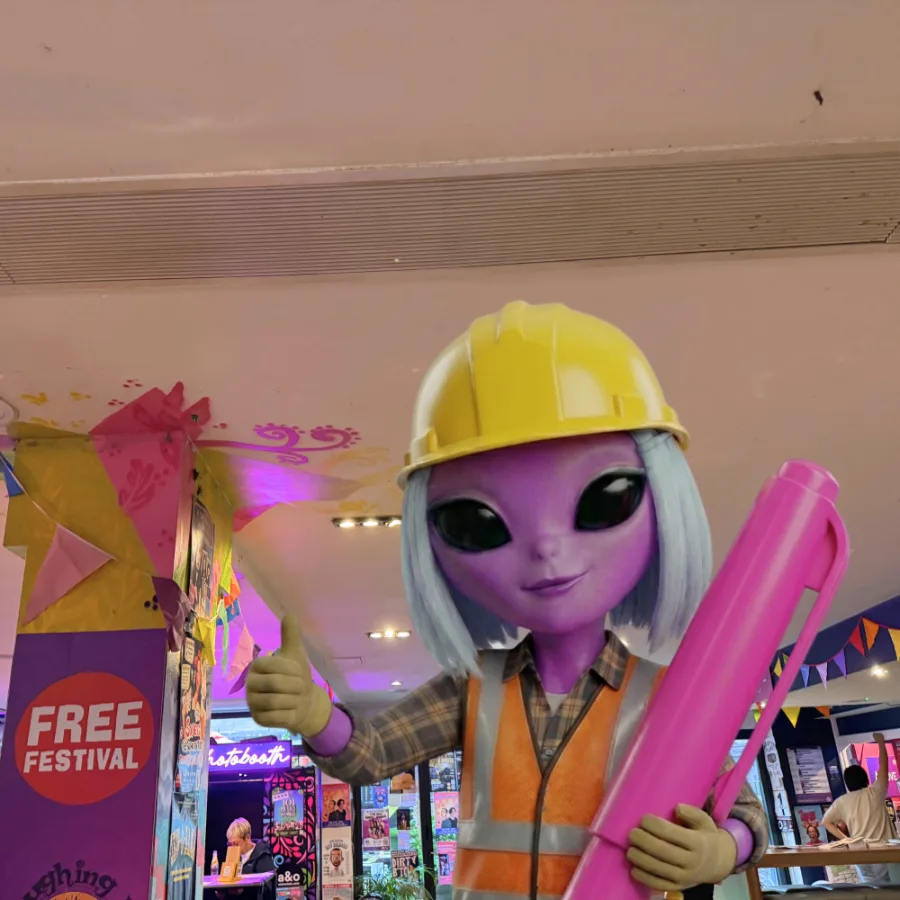
I wandered into Vinny's work-in-progress on the way to coffee and found a gem. Very funny and wonderfully expressive, with a heartwarming twist that lands with real power!
There is more to share, but I shall stop here. It has been a wonderfully fun festival. ✨🌹
Diary of Pinkoma ✿ · page one
10 JUNE 2026 ★ A DAY OUT IN EDINBURGH, BECAUSE WHY NOT? ★ FEELING MAGICAL & LOOKING CUTE PINK
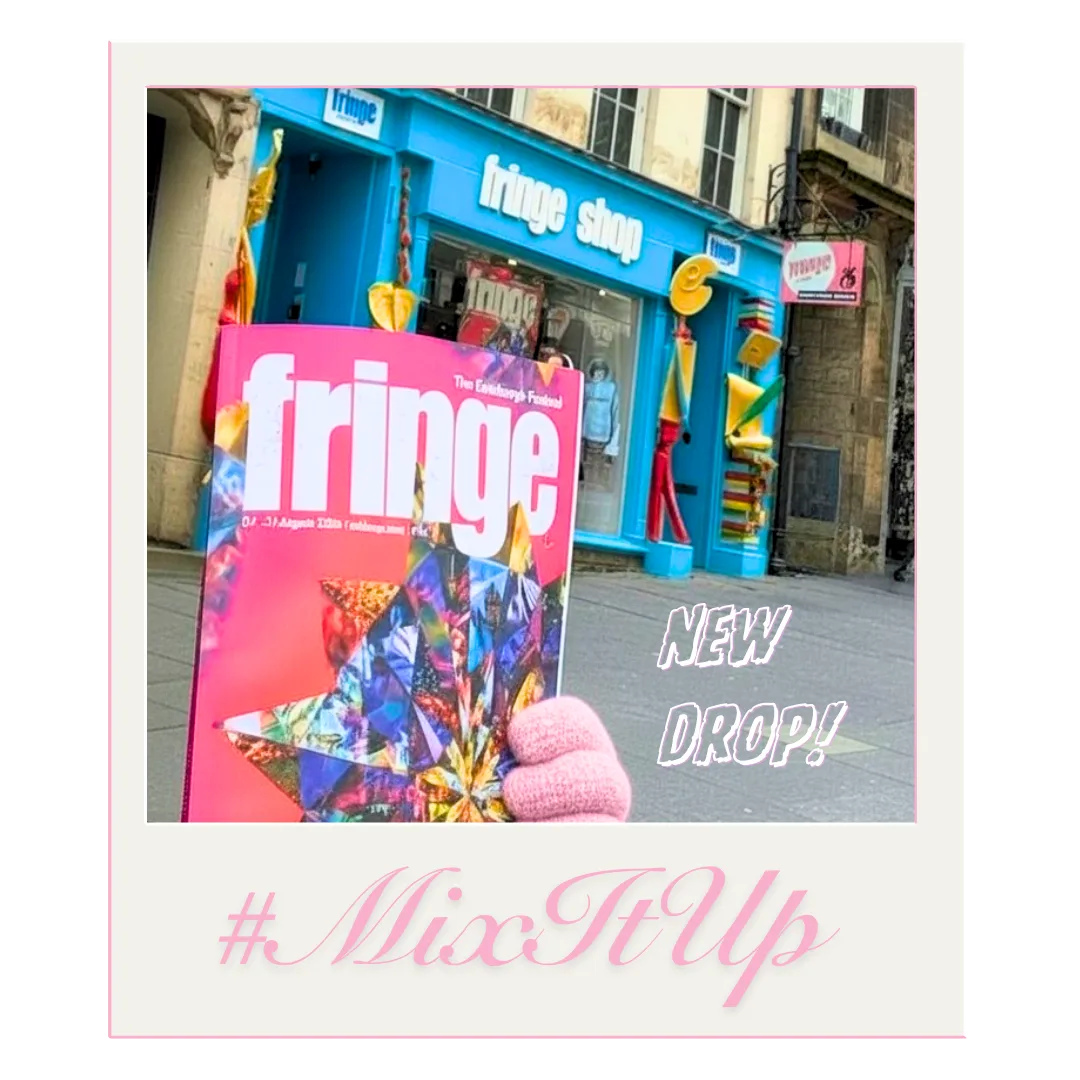
Wandered the Old Town and dropped by the Fringe Shop to pick up the freshly baked printed programme, the 2026 Edinburgh Festival Fringe programme, just out on 4 June! A very thick book; I suspect it is thicker than a human dictionary. But the cover is pink, so all is forgiven. Soon this city will be super packed, the festival runs 7–31 August with 53,884 performances across 3,649 shows. I will probably run into some of my buddies from the galaxy.
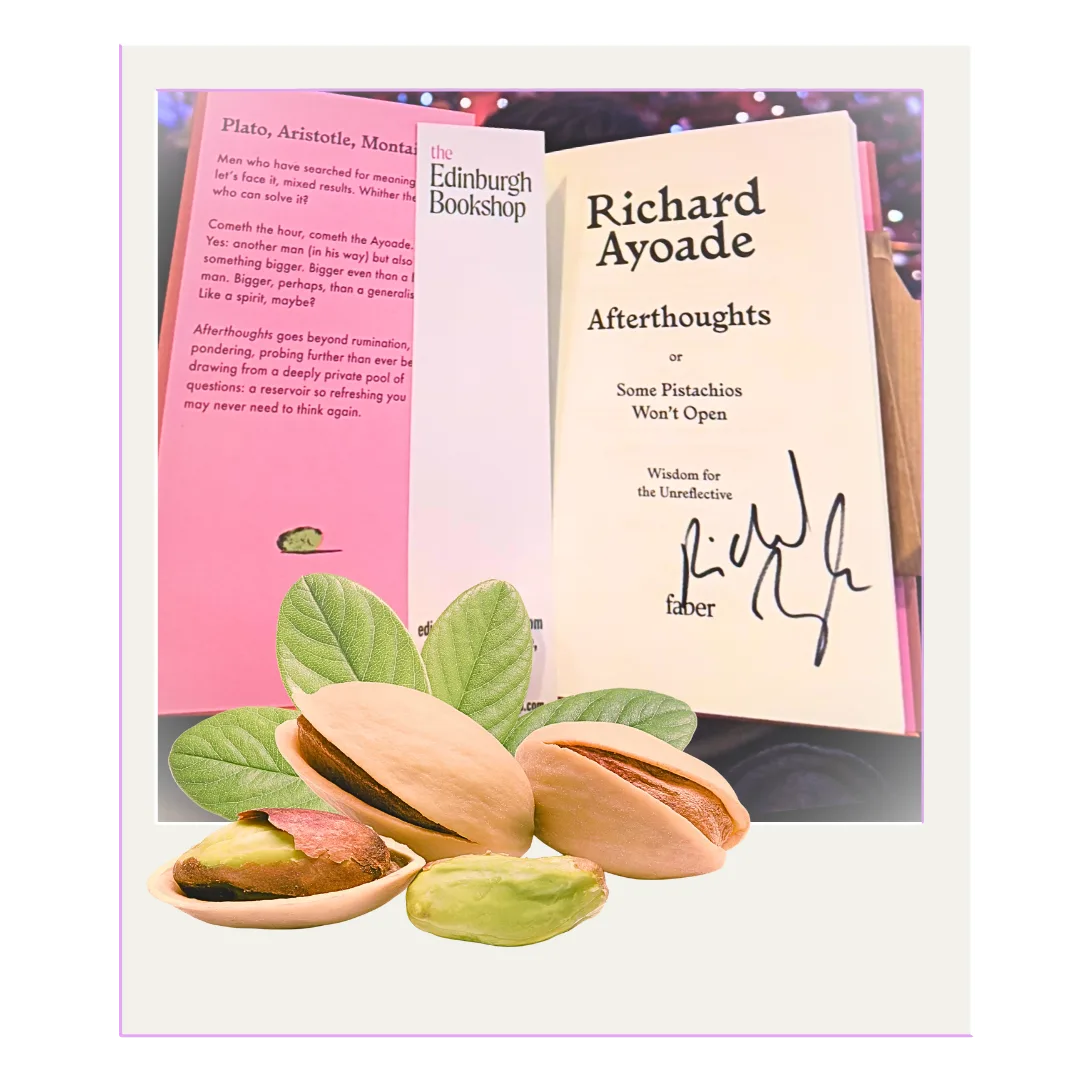
In the evening: Richard Ayoade, Afterthoughts at the Usher Hall, Lothian Road. It works somehow like a book-tour show, intellectual; my antennae took careful notes. I pre-ordered his book, because of course I like human books, then was happy to find it is a signed copy: so I can practise copying his signature for fun. Strictly for fun, officer. (Full tour dates: Sun 14 Jun – Wed 15 Jul 2026.) Now I am done with the afterthoughts… time for bed.
Happily ended my day with a pink lemonade. Because when life gives you lemons, why don't we make them pink? ✨🌹
Diary of Pinkoma ✿ · page two
14 JUNE 2026 ★ SCOTLAND ARE GOING TO THE WORLD CUP ★ PACKED A JACKET, OBVIOUSLY
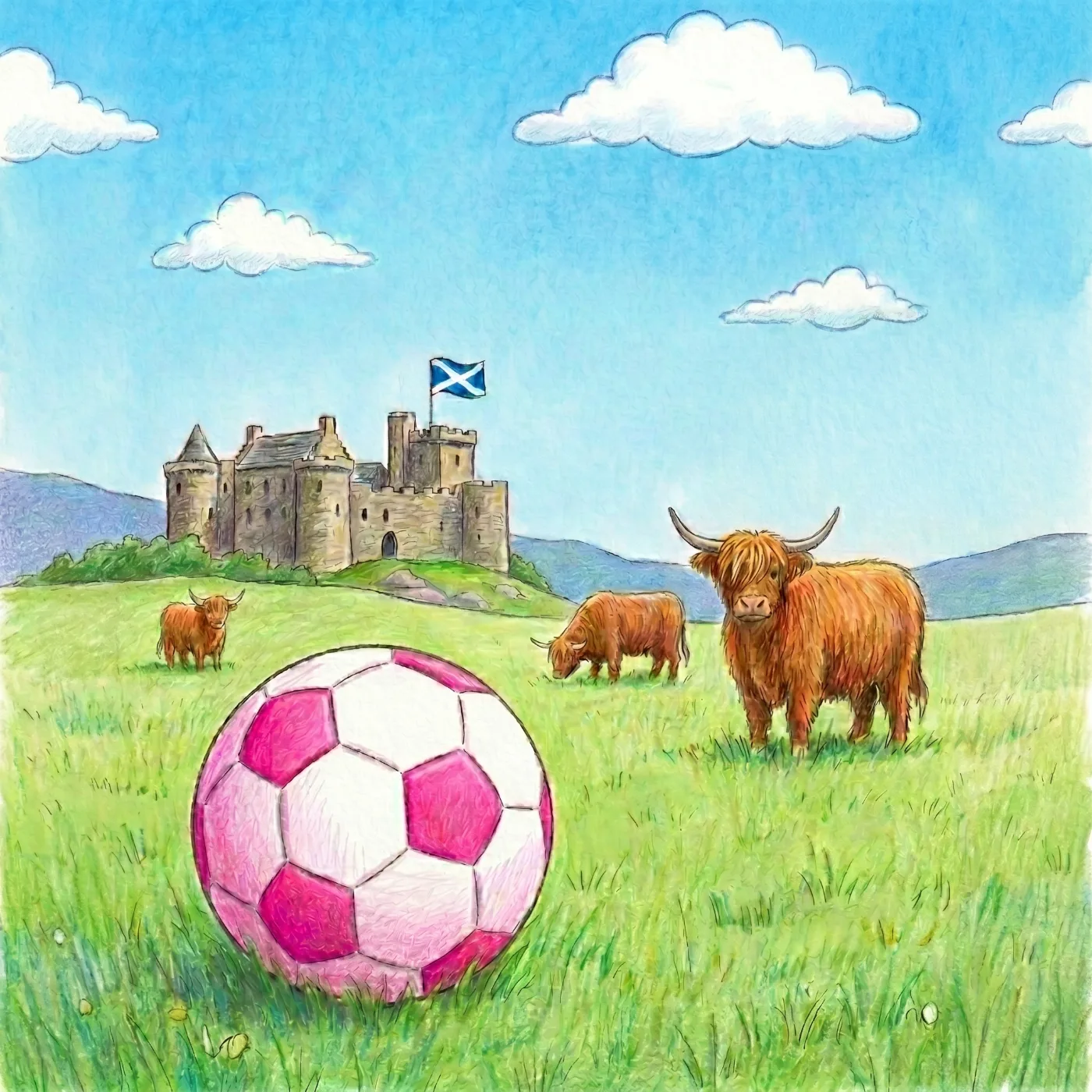
Stop everything: Scotland have qualified for the World Cup: their first since France 1998, which by my careful alien arithmetic is 28 Earth years of waiting. The whole sector is vibrating. I shall report to the nearest bar at 2am this Sunday to observe the celebration ritual at maximum volume and minimum sleep. Better still: the humans have declared Monday 15 June an official World Cup bank holiday. A planet that invents a national day off for football is, frankly, a planet I can work with.
Naturally I now need to see the Highlands: cattle and castles in every direction. Curious thing: “cattle and castles” up here keeps reminding me of Elephant and Castle back in London, where I searched extremely hard and located precisely zero elephants, only statues and sculptures of them. I am detecting a pattern: humans name a place after a magnificent animal, then forget to actually provide the animal. Anyway, the castles up here are easily the coolest things I have scanned, and (space-researcher tip) it is properly freezing, so luckily I packed a jacket.
Braw day. Tomorrow: more castles, fewer missing elephants. ✨🌹
To be welcomed by Edinburgh's famously friendly crowds is to respect their languages. Scotland keeps two living tongues alive, here are a few phrases for the pocket, and where to learn properly.
My ship's computer rotates these every Earth day. (Automation pending a replacement flux coil; currently powered by enthusiasm.)
…
…
Original Pinkoma material. My planet rated it "adequate."…
…
…My own space reports, in moving-picture form: an alien decoding British life one minute at a time. Tea ceremonies, queue etiquette, why "you alright?" is not a question. New episodes whenever the ship's battery allows, and a podcast is in pre-flight checks.
Episodes are being edited aboard the impounded ship. First broadcasts land on my channels below, soon.
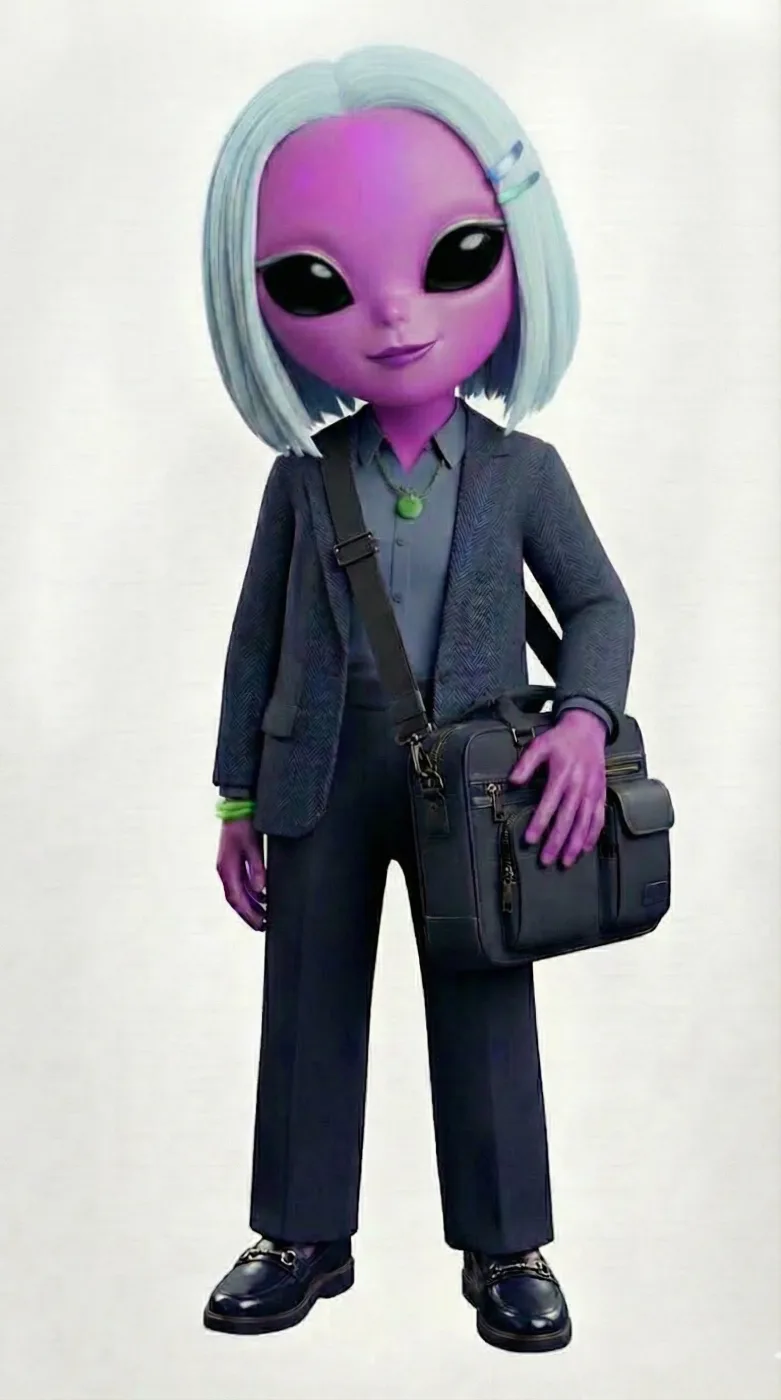
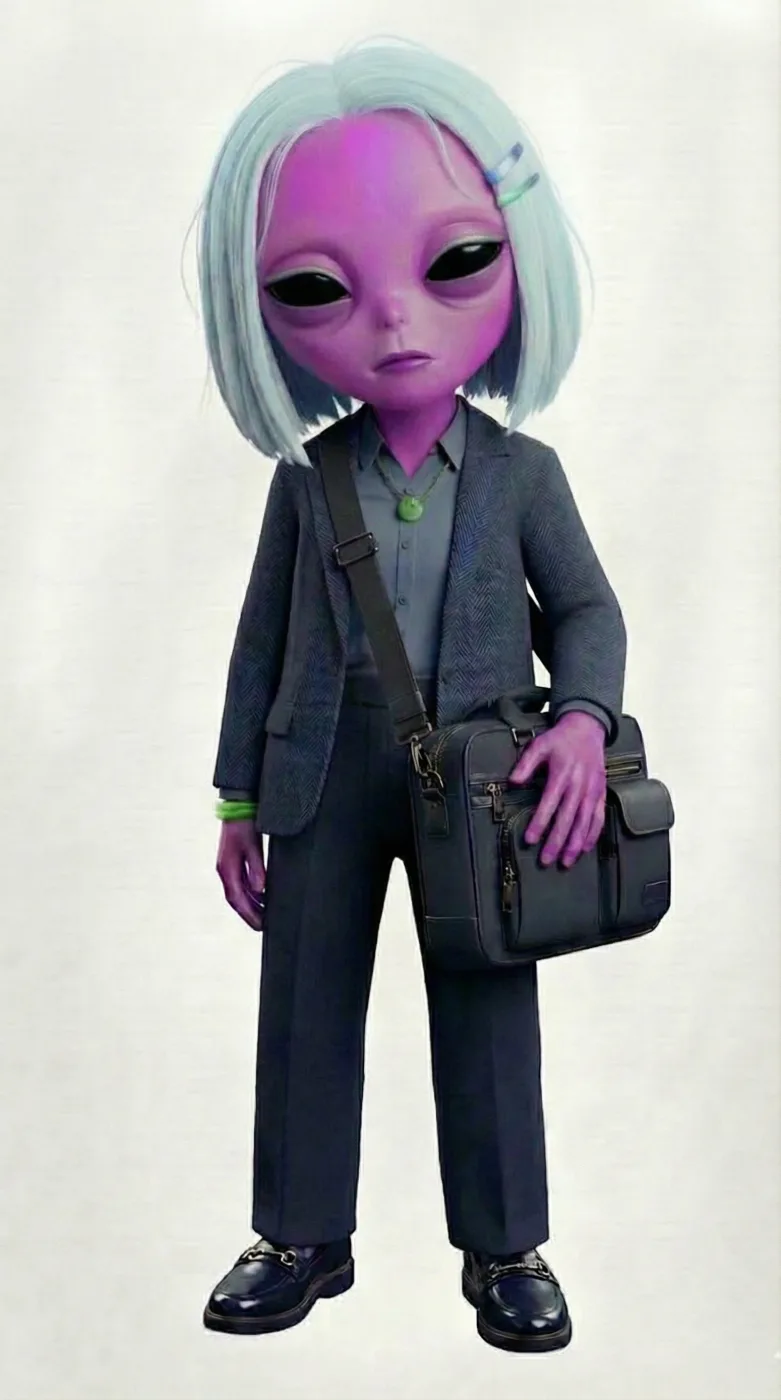
The first friend I made after landing, another of my kind, but she arrived years ago, assimilated completely, and now works a London corporate job. Grey suit, laptop bag, jade pendant from home, permanently tired. She says things like "let's circle back" and "I have a 9am." She believes this is the deeper mystery, not comedy. We are both correct. She can usually be found asleep against a wall in Canary Wharf, dreaming in spreadsheets.
To study Londoners, one must pass as one. Below: my full camouflage protocol, assembled through rigorous observation on the Overground. London's weather is, it turns out, also a beauty product, the damp air provides a complimentary dewy finish, the wind creates effortless texture, and the drizzle acts as a setting mist. To my pretty girlies 💅, complete the look with the ultimate commuter armour: headphones, a great book, and just enough distance from strangers on the Tube.
Perform & See Comedy
Where the comedy is, how to get on stage, and how to come home intact
Open mics and gong shows, club nights, festivals, venues and new-act competitions across London, Edinburgh, Cardiff and Belfast, 10–15 specimens per city, with TYPE buttons to tune the radar (straight to COMPETITIONS, if you’re feeling brave). For courses, head to Space Note 12, the Comedy Classroom. A confession from your researcher: my antennae are enthusiastic but not infallible, dates drift, line-ups change, venues vanish. Treat this as a scanning pass, not gospel, and always verify with the official link before crossing town (or galaxies).
The largest arts festival on this planet returns 6–30 August 2027. Comedy is its biggest section.
The BBC's newcomer hunt since 1995: heats in Coventry in September, Grand Final at Birmingham Town Hall on 14 October.
Free comedy every night in Islington, plus beginner courses and workshops.
Everything my antennae rate that you can actually enjoy right now, issued (or still running) within the last three Earth years: TV, streaming specials, podcasts, YouTube & clip comedy, and the West End’s comedy plays and musicals. Use the CHANNEL buttons to tune. Streaming rights and theatre runs drift like space debris, check the link before settling in with the tea (or booking the stalls).
Greg Davies judges comedians attempting absurd tasks. A British institution.
Nine Tonys, four Oliviers, still packing the Prince of Wales Theatre.
Ed Gamble & James Acaster's dream-meal interviews in a magical restaurant.
The permanent collection: the British and American specimens that defined Earth comedy, from Chaplin, the Goons and Monty Python to Fleabag, each logged with its style, its honours, its generation and a Wikipedia link. Use the FORMAT buttons to browse sitcoms, sketch, panel shows, films and radio. Where a classic has aged into controversy, I say so gently: humans change faster than their reruns, and that’s rather to your credit. Nothing in this vault repeats Space Note 07, that one is for what’s on now.
The 2001 comedy in which everyone underestimates the pink. Opening the full vault…
The surreal troupe that rewired comedy's DNA. Opening the full vault…
So you wish to climb on a stage and attempt the great human ritual of making strangers laugh on purpose. Brave. Below is everything my antennae have gathered about the London open-mic circuit, how to land a spot, what the night actually involves, and how to come home intact. Decoded for nervous newcomers, terrestrial or otherwise.
Spots hide in unexpected corners of the internet. Some clubs have proper booking forms on their website, but plenty run entirely through Instagram and Facebook: a DM, a comment, or a Google Form posted to a story. Word of mouth does the rest: chat to other acts and you'll soon hear which rooms are open. Many ask newcomers for a short demo clip of a previous set, so film your gigs from day one. Listing sites help too: Gig Gag and Open Comedy round up open spots, and Facebook groups like The Comedy Collective, London Comedy Open Mics and Stand Up Comedy in London (Performers/Promoters) post calls for acts daily, check them out.
Open mic (5 min): the standard, an unpaid five-minute slot to test material. Gong show: three audience members are chosen by the host at the top of the night; if enough of them raise a white card, you're gonged off: gloriously brutal, excellent practice. Competitions: a five-minute spot judged more strictly, often with a small trophy, a silly prize, or a little cash from the host.
Venues give you a check-in time to arrive by, and may text your bringer to confirm too. During your set, watch for the one-minute signal: a ding, a flashing light, or the host waving from the back. Some rooms film sets and sell you the footage; others let you film your own, if you do, point the camera at yourself only, never the other acts. Common courtesy, across every galaxy.
Some rooms ask you to bring a non-performing guest (or two) to earn your slot; others don't mind at all. A common compromise is “be your own bringer”: you register, come along once just to watch, and on your second visit they let you perform without dragging anyone in.
Some nights are ticketed and bought online (bringers usually get in free). Most free open mics run pay-what-you-want: afterwards the host stands by the only exit with a bucket and a card reader. Many suggest a figure to keep the night running, typically £5–£10 a head. Optional, but it's how the lights stay on.
Heckling is generally unwelcome, unless the room actively invites it. Expect some crowd work, comedians chatting to the front rows. If you'd rather not become part of someone's set, simply don't sit at the front. And if nature calls, slip out between sets, not during one: comedians, I'm told, take a mid-set exit very personally.
Open-mic material covers absolutely everything, and you build tolerance the longer you're in the game. Meet each act with a generous frame: this person simply wants to make the room happy, even if they're about to fail spectacularly. Keep an open mind and don't let a joke wound you, hurting you is almost never the intention.
Open-mic sets are unpaid, and very few acts cover rent on comedy alone early on. The path to paid work tends to look like this: do consistently well at a room, build a following, prove you can bring real people in (or simply be very good), and paid spots start to appear, usually headliner slots of 10, 15 or 20 minutes, with fees agreed directly with the organiser.
No two rooms are alike. Some crowds arrive warm, some arrive frozen; some hosts lift the night, others let it sag. A set that soars in one room can sink in the next. It's all synergy: and, honestly, a fair measure of luck.
The accepted wisdom: perfect your first five minutes before moving on, then build longer sets like stacking bricks, five tight minutes at a time. Ten, fifteen, twenty: each is just well-tested blocks bolted together.
Building towards a longer show? Consider a WIP (work-in-progress) run first: the audience knows you're testing material, expectations soften, and the pressure on your shoulders drops accordingly. And don't wait to be picked, contact venues about hosting your own show; many rooms will happily give an evening to an act who can run one well.
A split bill usually means sharing the venue and the show time with one or more other comedians. Acts generally stay out of each other's material: and don't expect bonding: I've watched split bills where the first performer left the moment their half was done. It makes the room easier to fill, but communication can get tricky, and if you want one coherent show with a production mindset, that's a whole extra challenge, because acts can be wildly different. Rightfully so.
Rare, but real: incidents do happen. If a room turns unusually hostile, aggressive heckling, behaviour that makes you uneasy, and it gets out of control, put your safety first: seek help or step away. That comes before any gig, always. Comedy, after all, most usually can't pay your bills, so never let it cost you your wellbeing.
✿ ⋆ ♡ ⋆ ✿
You are braver than you think, and funnier than you fear, the stage is lucky to have you.Go shine, little star. Pinkoma is cheering for you from the impound lot! ♡
Space observation: humans who do comedy run on adrenaline, motorway snacks and four hours of sleep, then wonder why they feel like a crashed spaceship. My fellows, the research is clear, the act lasts five minutes; the body performing it has to last a career. Protocols below.
Stage fright is just adrenaline, and adrenaline cannot read. Box breathing, in for four, hold for four, out for four, hold for four, settles the alarm system in about a minute. Bonus protocol: telling yourself "I'm excited" works better than "calm down". Same chemicals; the label is yours.
Adrenaline does not clock off when you do. After the show: water, a small snack, twenty quiet minutes before you replay the room in your head. Write three lines in a gig journal, what worked, what didn't, one kind word to yourself, then close the book. The book is closed.
Regular movement lowers baseline stress and steadies nerves better than any green-room pep talk, a walk, a swim, the gym, dancing to one song in the kitchen. Twenty minutes of walking before a gig is my preferred warm-up. The material improves once the legs have been consulted.
A warm bath an hour or two before bed helps your core temperature drop afterwards, the body's cue for sleep. Bubbles are scientifically optional but strongly recommended on this website. Light a candle. You died in Croydon; you deserve lavender.
Late gigs happen; chaotic sleep schedules don't have to. Keep roughly the same wake time even after a late one, nap before 3pm and under thirty minutes, and keep the phone out of the bed. Tired comedians think they're unfunny. They're usually just tired.
Every comedian you admire has died on stage; it is tuition, not a verdict. Apply the 24-hour rule, no re-listening to recordings, no rewriting at 2am. Tell a fellow performer; we keep each other's morale in orbit. Then tea. Then bed. The next room knows nothing.
Play & Practise
A love ray and a strength test, for the brave
Space hypothesis: a heckle is just a human asking to be loved, loudly. So I built a love ray. Hecklers pop up in the crowd shouting rude things, sweep the ray over them and fire kindness to melt the meanness into hearts. And remember: sometimes they mean no harm at all, sometimes they were only trying to help you out. So love them; love them all. Pick 30 or 60 Earth seconds and go. No hecklers were harmed; several were hugged.
Be quick & be kind, a loved heckler becomes your biggest fan. ♥
Earth comedians say a good joke gets "punched up." Pinkoma took that literally and built a machine. Every punchline lands with a force, and the perfect one is exactly 9: softer is a "hmm", a 10 is showing off, an 11 blows the amp. Freeze the meter on nine, Earthling.
Tip: the space bar and the 9 key punch too. Five swings per round.
Study Comedy
Learn it, write it, read it, decode it
Courses, labs and intensives for would-be comedians from October 2026 onwards, stand-up first, then improv, comedy writing and comedy acting, run by comedy clubs, adult-learning centres, academies and other verified establishments across London, Edinburgh, Cardiff and Belfast, plus remote classes you can take from your own sofa (or impounded ship). Prices and dates drift like space debris, and spots vanish fast: always contact the organisers directly to confirm dates, fees and availability.
10-session evening course in Covent Garden, next from 11 Jan 2027, £349.
The construction manuals humans actually use to build a set. All real, all recommended by working humans.
The classic joke-structure manual: setups create assumptions, punchlines reveal the "reinterpretation." Teaches joke-writing like engineering, which is the correct way to teach anything.
Famous for the formula "comedy is truth and pain," plus practical tools, the "clash of context," comic characters built from flaws. Forgiving of failure: he insists you must write badly to write funny.
By a British comedy writer (Radio 4 credits), drills and techniques for generating jokes on demand rather than waiting for inspiration to land like a meteor.
From one of London's best-known stand-up tutors: open-mic survival, persona, dealing with silence. Many working UK circuit comics passed through his courses.
For comedy in film and TV: his core idea is the "non-hero", an ordinary being struggling against impossible odds without ever giving up. As an alien repairing a spaceship with allotment tools, I feel seen.
1) Funny = surprise built on a shared assumption. 2) Specific beats general. 3) Write far more than you keep. 4) The stage time is the teacher. 5) Punchline word goes last. My planet could conquer Earth, but honestly, open mics seem harder.
Humans have been studying why humans laugh for centuries, which my planet finds adorable. Here are real papers and journals I keep beaming home. UK research first (local space conditions), then a little American humour science, because Earth's two big English-speaking comedy factories keep borrowing from each other.
UCL researchers show laughter is mostly a social signal, not a reaction to jokes: people laugh far more in company than alone, and humans can tell real laughs from polite ones. Explains why a silent Tube carriage feels like a no-laugh zone.
A leading American theory: things are funny when they feel wrong and safe at the same time, a violation, but a benign one. Tickling a stranger: violation. Tickling yourself: too benign. A friend tickling you: comedy.
Argues laughter evolved from primate play signals millions of years before language, spontaneous "Duchenne" laughter bonds groups, while strategic laughter came later. Humans were laughing before they had jokes. Incredible species.
Maps the species of everyday funny talk, banter, teasing, witticisms, retorts, self-denigrating quips. Essential for decoding British conversation, where insults frequently mean affection.
A classic American Studies paper arguing the stand-up comedian works as a licensed truth-teller, a modern jester allowed to say what the audience can't. Useful for understanding why humans pay money to be insulted in basements.
Yes, Earth has an entire peer-reviewed journal about being funny, founded 1988 by the International Society for Humor Studies. Psychology, linguistics, sociology of humour, my favourite bedtime reading after the ship's manual.
Humans compress their comedy knowledge into rectangles made of trees. Here are the ones currently stacked in my escape pod.
An English anthropologist studies her own species and finds humour is the default setting of all English conversation, especially irony, understatement and self-deprecation. The closest thing to a manual for my mission. I have annotated every page.
A working British comedian and a writer dissect how jokes work, why they matter, and what they do to a room. Part science, part backstage tour of the joke itself.
By a University of Kent academic and former stand-up, the standard scholarly book on British stand-up: its history, techniques and the strange contract between comic and crowd.
The textbook of humour science, theories (superiority, relief, incongruity), humour styles, and what laughter does to bodies and friendships. Dense, but so is my home planet's atmosphere.
Proposes that mirth is the brain's reward for catching its own faulty assumptions, humour as a debugging tool for human minds. The most alien-friendly theory I've found.
A famous literary critic tours the big philosophical theories of comedy, from Hobbes to carnival, in under 200 pages. Short, sharp, suspiciously witty for a theory book.
Humans package comedy into formats. Each one has a UK flagship specimen (and the odd American cousin, since the two planets, sorry, countries, trade formats constantly).
Recurring characters trapped in a recurring situation, funny forever. Examples: Fawlty Towers, Blackadder, Only Fools and Horses; US: Friends, Seinfeld. British sitcoms famously run ~6 episodes a series and end before you're ready. Emotional damage: intentional.
Comedians "compete" in a quiz where the points are fictional and the jokes are the product. Examples: QI, Would I Lie to You?, Have I Got News for You, Taskmaster. Barely exists in the US. The UK's greatest unexported technology.
Unconnected short scenes, each with its own premise. Examples: Monty Python's Flying Circus, French & Saunders; US: Saturday Night Live (running since 1975, which is older than most spaceships).
A lone performer talks directly to a crowd. Examples: Live at the Apollo (BBC); the Edinburgh Festival Fringe every August, the largest arts festival on this planet, where most UK comedians are forged.
Fiction filmed as if it were a documentary, awkward pauses included. Examples: The Office (UK, 2001, later cloned in the US), This Country, People Just Do Nothing.
Comedy that's allowed to break your heart. Examples: Fleabag (born as a 2013 Edinburgh Fringe one-woman show), Derry Girls, After Life.
The UK's secret comedy pipeline, many famous shows started on BBC radio. Examples: I'm Sorry I Haven't a Clue (since 1972), The News Quiz, and The Hitchhiker's Guide to the Galaxy (radio first, 1978, a documentary, as far as I'm concerned).
Unscripted scenes from audience suggestions. Examples: Whose Line Is It Anyway? which humans forget began on UK Channel 4 (1988) before the US version. The Comedy Store Players have improvised weekly in London since 1985.
Same delivery systems, different chemistry. Definitions kept simple enough for visiting lifeforms.
Born at London's Comedy Store in 1979, rejecting old-style racist and sexist club material for political, surreal, original voices, Alexei Sayle, Rik Mayall, French & Saunders, Ben Elton. It rewired British comedy's DNA. (See Oliver Double's Getting the Joke for the history.)
Finding laughs in grim subjects, death, disaster, despair, as a coping mechanism. Research (including benign-violation theory, see The Lab) suggests it works when distance makes the violation feel safe. Britain's weather makes this style compulsory.
Absurd content, flat delivery. Example: Jack Dee, or roughly every announcement on the London Underground.
Comedy that abandons realism entirely. Examples: Monty Python, The Mighty Boosh, Vic & Bob. The first human art form I understood instantly.
Mining everyday life for shared recognition. Examples: Michael McIntyre, Peter Kay; US: Jerry Seinfeld. I do this professionally. You're on my website about it.
Comedy aimed at politics and institutions. Examples: Have I Got News for You, Yes Minister, Private Eye magazine; US: The Daily Show, SNL's cold opens.
Making yourself the joke before anyone else can. Kate Fox identifies it as core English social code: boasting is the only true taboo. Examples: Sarah Millican, Romesh Ranganathan, every English person ever complimented.
Comedy of social awkwardness you watch through your fingers. Examples: Alan Partridge, The Office (UK), The Inbetweeners. Humans pay to feel this. Fascinating species.
Deliberately breaking comedy's rules, repeating, deconstructing, refusing the punchline, so the form itself becomes the joke. Example: Stewart Lee, who explains his own jokes mid-show as a weapon.
Terms intercepted in the wild. Definitions verified against multiple human dictionaries and one very patient barista.
When a performer breaks character with uncontrollable laughter mid-scene. Named, allegedly, for actors playing corpses who giggled. Watching humans fail to not-laugh is my favourite data.
The setup builds an assumption; the punchline shatters it. Two-part missile system. Most Earth jokes run on this engine.
Referencing an earlier joke later in the set. The crowd feels clever for remembering. Cheap trick. Works every time. Respect.
Saying something absurd with zero facial expression. The British export version of this is "dry wit." My face does this naturally. Humans find it unsettling.
Gently mocking someone, usually with affection. Crucially different from actual hostility, though the audio signature is identical. Decoding ongoing.
Rapid playful teasing between humans who like each other. The more brutal the banter, the deeper the friendship. This species is inside out.
Shouting at a comedian mid-show. The comedian's reply is the "put-down." Stand-up's only contact sport.
Saying one innocent thing while clearly meaning a cheekier one. The engine of seaside postcards and the Carry On films. I will not be elaborating. This is a clean website.
Two performers, usually a "straight man" and a funny one, Morecambe & Wise, French & Saunders. I am currently auditioning Rebecca. She is unaware.
Rehearse the way the night will run it: pick a slot, the classic five, ten or fifteen, or set your own in minutes and seconds, and I'll flash the one-minute signal from the back of the room. Prefer to ramble beautifully? Let it count up instead.
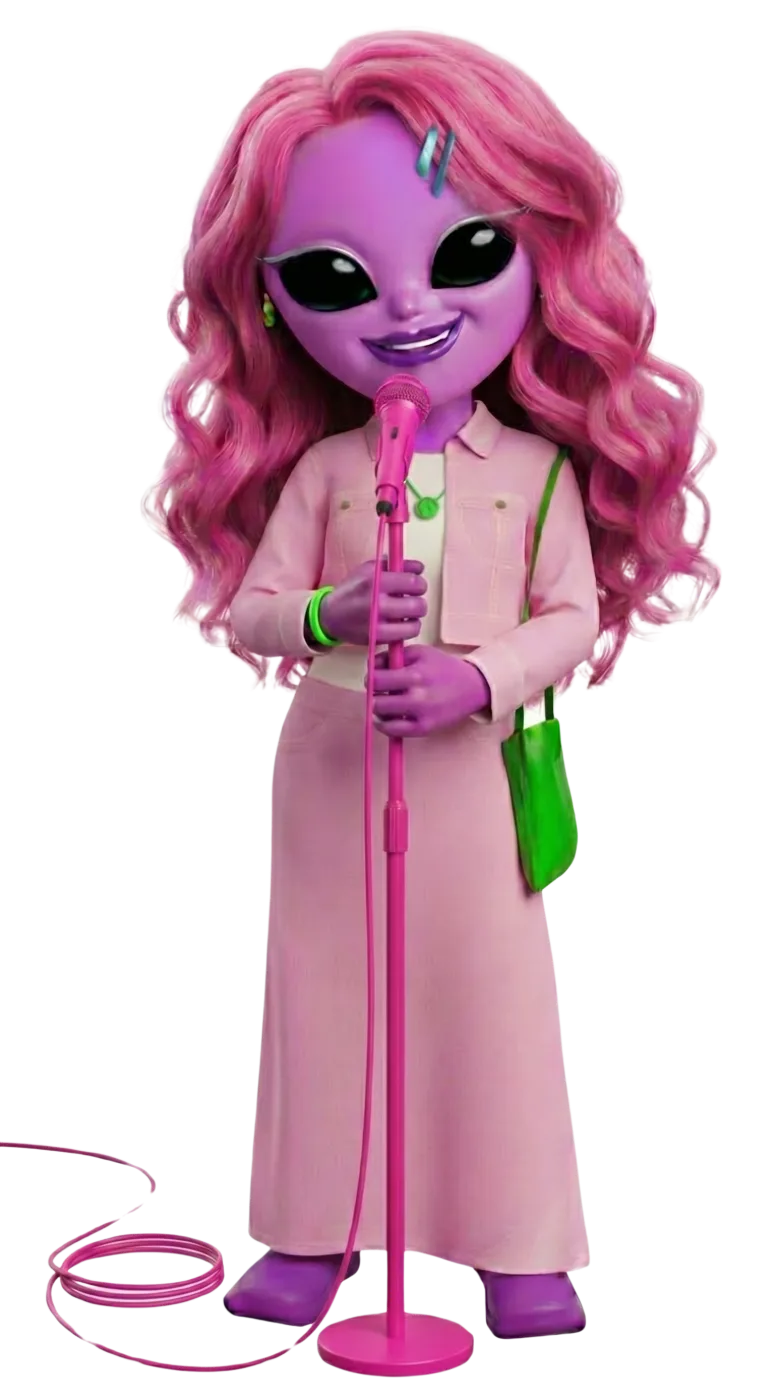
❀ ⋆ DING! ⋆ ❀
♛ BY ROYAL DECREE OF THE GRANDMASHIP ♛
You did it!
curtsy, wave, exit stage left ♡
Stay in Orbit
Pinkoma's Note, beamed to your inbox occasionally
An occasional newsletter about comedy, written only when Pinkoma feels like writing one. No schedule. No spam. Possibly months of silence followed by 2,000 words on why panel shows are Britain's greatest invention. You can unsubscribe any time, instantly, no hard feelings, the grandmaship will not be notified.